 PocketProof
Ask most people what's wrecking their budget and they'll blame something big and dramatic — rent, a car payment, subscriptions. Meanwhile the actual biggest leak is smaller, more frequent, and easy to miss precisely because no single instance of it feels like a lot: eating out. Not five-star dinners. A $9 fast food lunch, a $14 delivery order, a $6 coffee-and-a-pastry breakfast. None of it feels like "spending money" in the moment. Added up over a year, it usually is the single largest discretionary category in a typical budget — bigger than entertainment, bigger than shopping, often bigger than both combined.
The math, even at fast food prices
Here's the part that surprises people: this isn't only a "stop going to nice restaurants" problem. Even cheap, fast food-only spending adds up meaningfully once you multiply it out.
| Meals out per week | Weekly savings if cooked at home | Annual savings |
|---|---|---|
| 1 | $5 | $260 |
| 3 | $15 | $780 |
| 5 | $25 | $1,300 |
| 7 (every day) | $35 | $1,820 |
Now widen it out to a more typical mix — some fast food, some sit-down, some delivery, averaging around $14 a meal — against a home-cooked meal averaging closer to $5 once you count groceries realistically (not the theoretical cheapest possible recipe). The same 5-meals-a-week habit jumps to $2,340 a year. That's the gap between what most people guess this costs them and what it actually costs.
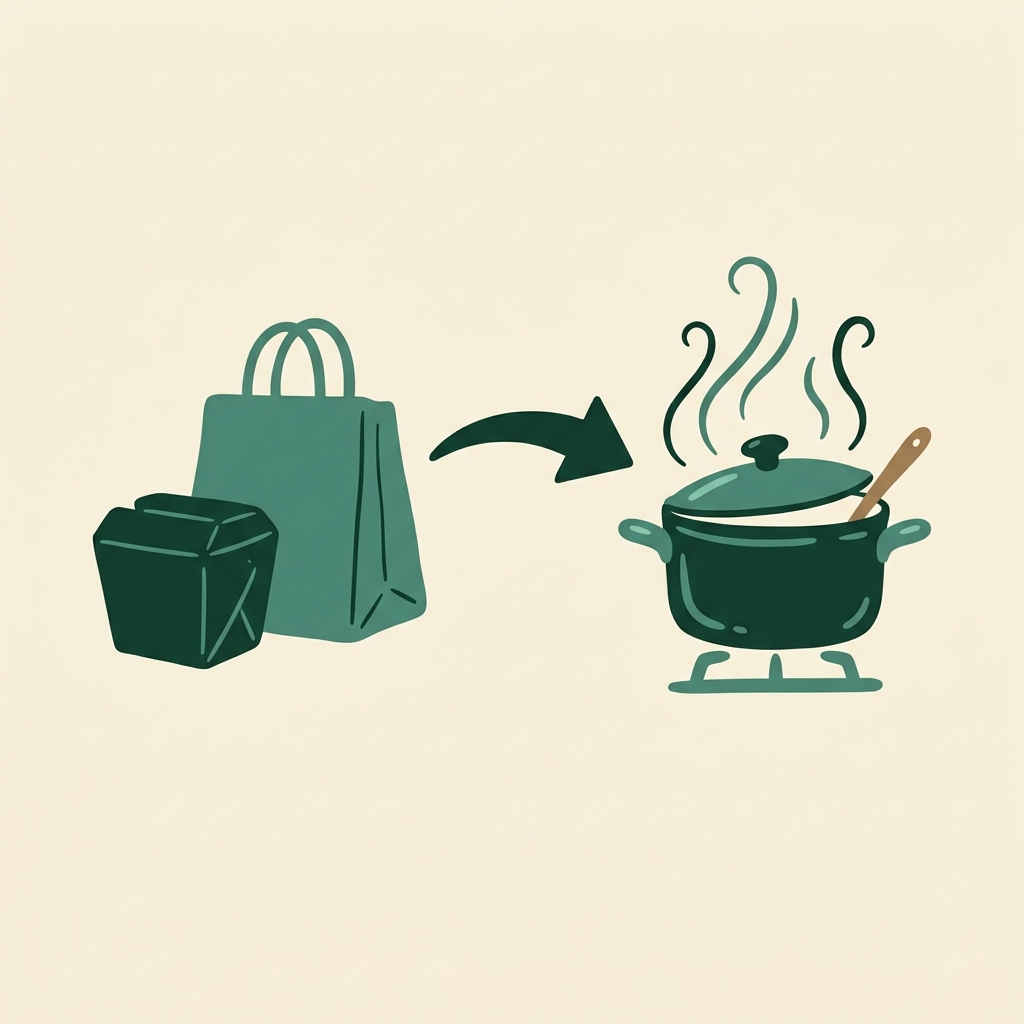
See what your own numbers add up to
Plug in how often you actually eat out, what you typically spend per meal, and a realistic estimate of what the same meal costs to cook. The defaults below reflect the blended fast-food-and-sit-down average above.
Eating out savings calculator
Assumes the difference stays consistent and doesn't account for grocery waste or eventual price changes — treat it as a realistic estimate, not a promise.
Where the gap actually comes from
It's not that home cooking is secretly cheap and restaurants are secretly expensive — it's that a restaurant price covers rent, labor, and a marked-up plate, while a home-cooked meal only covers the ingredients you personally paid for and are willing to shop, prep, and clean up around. That convenience is a completely reasonable thing to pay for sometimes. The problem is when it becomes the default without anyone deciding it should be, just because it's easier at 6pm on a Tuesday than anything else.
You don't need to go to zero
You don't have to cut out eating out entirely to see the savings — you just have to be honest about how many meals are happening on autopilot versus how many you'd actually choose if you paused to think about it. Swapping 2 of 5 weekly meals out for home-cooked ones still saves roughly $936 a year at the blended rate above ($9 difference × 2 meals × 52 weeks), without asking you to give up eating out altogether.
Making the swap actually stick
- Pick 1-2 "no cook" nights on purpose, not by default. Deciding in advance which nights you'll eat out keeps it a choice instead of a fallback for every night you didn't plan dinner.
- Keep 3-4 meals on repeat that you can make without thinking. The barrier to cooking is rarely cost — it's decision fatigue. A short rotation removes the "what do I even make" step entirely.
- Batch-cook once and eat it twice. Cooking double and freezing or reusing the leftovers turns one cooking session into two home-cooked meals, which is where a lot of the per-meal cost drops even further.
- Keep 2-3 backup pantry meals for the nights you truly don't have time. Having a fast home option (eggs, pasta, a frozen staple) removes the main excuse for defaulting to takeout on a busy night.
None of this requires a full meal-prep hobby or a grocery budget overhaul — that's covered separately in our guide to cutting monthly expenses. This is just about noticing where the biggest, least-tracked leak usually is, and deciding on purpose how much of it you actually want. If you're not sure where else your money is quietly going, our fixed vs. variable expense calculator finds the rest of the gap.