 PocketProof
Rebuilding credit takes a specific sequence of actions, most of them in the first few months, that compounds the same way on-time payments and low utilization always do. Starting from nothing and starting from damage use nearly the same plan, because both come down to giving the scoring model a consistent, positive track record to work with. If you've never had a card at all and nothing negative on your report, start with our guide to picking your first credit card instead.
What actually moves the score
Five factors make up a FICO score, and they're not weighted equally — which is exactly why the order of this plan isn't arbitrary:
| Factor | Weight | What it means for a rebuild |
|---|---|---|
| Payment history | 35% | Every on-time payment counts. This is the single highest-leverage thing you control. |
| Amounts owed (utilization) | 30% | Keep balances low relative to limits — this responds fast, in both directions. |
| Length of credit history | 15% | Can't be rushed. The oldest account you have is doing real work — don't close it. |
| Credit mix | 10% | Having more than one type of account (revolving and installment) helps modestly, later. |
| New credit | 10% | Each hard inquiry and new account has a small, temporary cost — space them out. |
The 12-month checklist
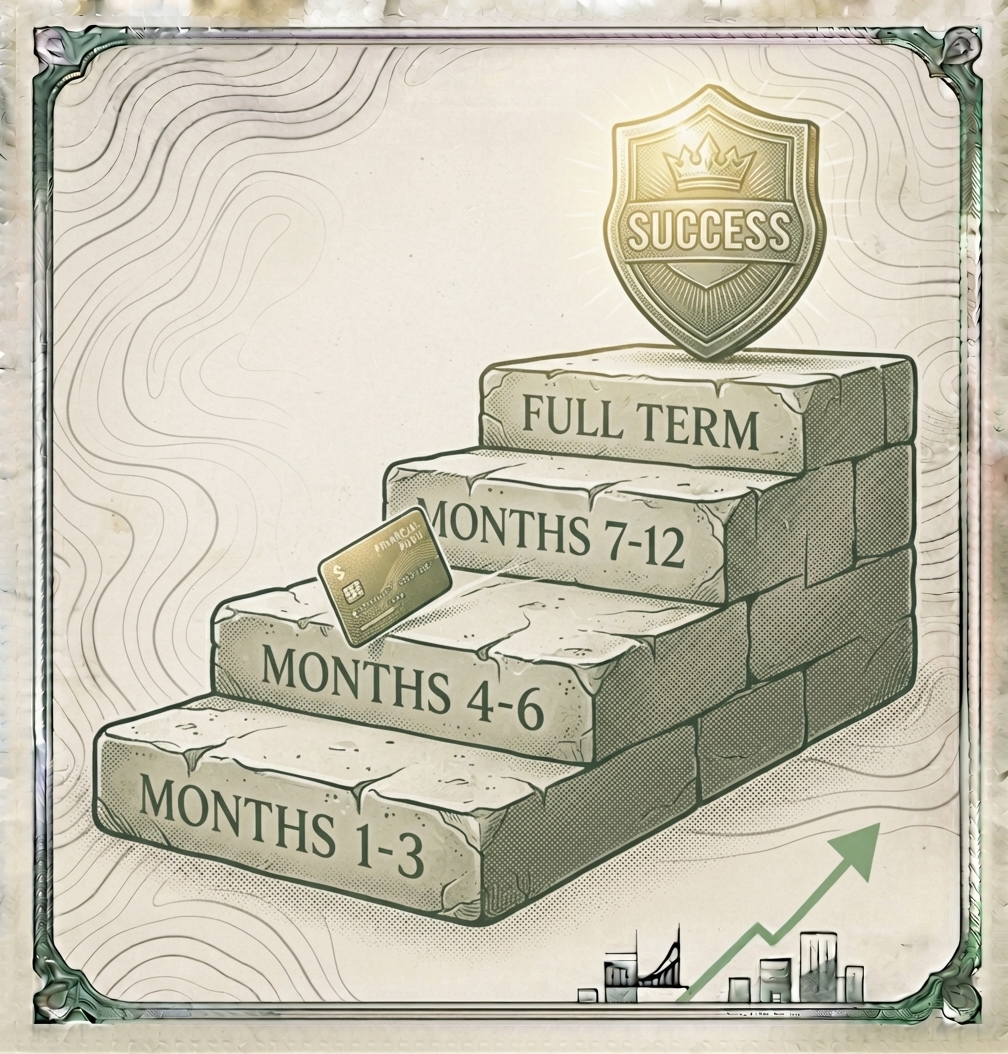
Work through these in order. Check them off as you go — your progress isn't saved anywhere, so screenshot it if you want a record.
Your 12-month rebuild plan
Months 1–3: Foundation
Months 4–6: Build the habit
Months 7–12: Diversify and maintain
A typical rebuild
Jordan starts with no credit history at all. Month 1: opens a secured card with a $200 limit, backed by a $200 deposit. Jordan uses it for a single recurring subscription — about $15/month — and pays it off in full via autopay every cycle, keeping utilization around 7%. By month 6, the account has reported six months of on-time payments with low utilization, and the issuer offers to convert it to an unsecured card with the deposit refunded. Jordan keeps using it the same way through month 12, adds a small credit-builder loan around month 8, and never applies for anything else in between.
This is a realistic, commonly reported pattern — not a promised timeline or score. Actual results depend on your starting file, the scoring model used, and factors outside this plan.
The boring version actually works
I've held an 800+ credit score for three years now, and I didn't do anything clever to get there — no churn, no hacks, no secret trick nobody tells you about. Just using a card for normal purchases and paying it off, month after month, the same unglamorous version of Jordan's plan above. It's genuinely that boring, which is honestly the most useful thing I can tell you about it: the system rewards consistency, not cleverness.
Mistakes that quietly undo progress
- Closing your oldest account. The immediate risk isn't your account age (closed accounts in good standing can still count toward it for up to 10 years) — it's utilization, since the credit limit disappears from the math right away. See our full breakdown of why closing your oldest card can hurt your score before doing it.
- Applying for several cards in a short window. Each hard inquiry has a small cost individually, but several close together compound and can look like risk-seeking behavior to a lender.
- Carrying a balance "to build credit." Utilization is measured whether or not you carry a balance month to month — paying in full every cycle still counts as usage and still builds history, without the interest.
- Paying for a "credit repair" service to do what a dispute letter does for free. Disputing genuine errors directly with the credit bureaus costs nothing and works the same way a paid service would do it for you.
If debt is part of what damaged your credit in the first place, our realist's payoff plan worksheet and debt snowball vs. avalanche comparison cover getting it paid down without the shame spiral making it worse. And once you understand the levers here, our breakdown of what happens to your score when you pay off a loan covers the flip side of this same system.