 PocketProof
I finished school in the US, moved back to my home country, and about a year later landed a job that brought me back. I had very little runway to sort out housing and a car, so I leased — reasonable at the time, given the timeline I was working with. It didn't take long to regret it. Whenever I brought it up, people had the same response: "a car's not an asset either way, buying isn't really better." Technically true about the payments. But it's not the whole picture, and running the actual numbers is what showed me the part everyone was skipping.
The part "a car's not an asset either way" misses
The argument itself isn't wrong. A car depreciates whether you lease it or finance it — nobody's calling a car an appreciating asset. But that argument is only about payments. It says nothing about equity, and a lease can absolutely build equity, even though nothing about a lease agreement advertises that fact.
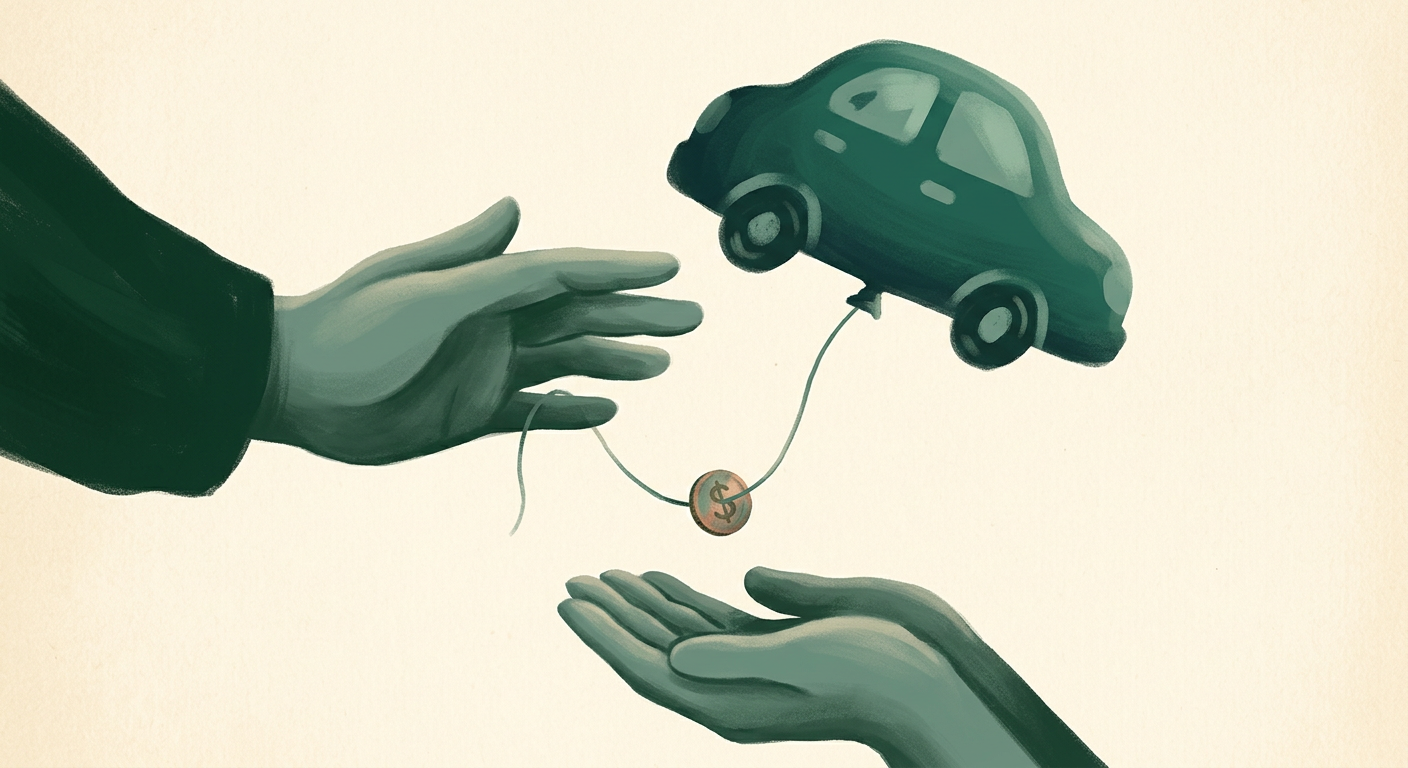
Here's why: your lease's buyout price (the "payoff") was set when you signed, based on a prediction of what the car would be worth today. Real used-car markets don't always cooperate with that prediction. If your car is worth more on the actual market right now than your contract predicted, that gap is yours — but only if you claim it before handing the keys back. At lease-end, if you just walk away, that gap goes to the leasing company for free. It's not a return of money you spent; it's money you were entitled to and didn't take.
What "lease equity" actually is
Two numbers matter, and neither is printed anywhere obvious on your lease statement:
- Your payoff amount — what your leasing company will accept, today, to end the lease and release the car. Call the leasing company or check your account portal; this number is always available on request.
- Your car's real market value — what a dealer would actually pay for it right now, not the number printed in your original lease contract. Get this from a few real offers (a dealer trade-in quote, an instant-offer tool, or both), not a guess.
Subtract the first from the second, and you get your equity. Positive means there's real money sitting in your lease that you can capture. Negative — "underwater" — means the leasing company would need more than the car's worth to let you out, which happens too, especially early in a lease term before much has depreciated off the payoff schedule.
Try it with your own numbers
Enter your payoff quote, your car's real market value, and what you'd pay for the used car you're considering instead. This compares buying out today against the alternative — finishing your remaining payments and starting the car-buying process from scratch once the lease ends.
Lease buyout vs. finishing your lease
Defaults match the worked example below.
The math, worked through
Sam has 10 months left on a lease at $480/month. The leasing company's payoff quote is $21,000. A few real trade-in offers put the car's actual market value at $24,500 — the used-car market moved after Sam's lease was signed, and the payoff schedule didn't move with it. Sam's eyeing a comparable 2-year-old used car for $23,000.
| Path | What it costs | When Sam owns the car |
|---|---|---|
| Finish the lease, then buy | $4,800 in remaining payments + $23,000 for the same used car later = $27,800 | 10 months from now |
| Buy out now | $23,000 used car − $3,500 equity = $19,500 net | Today |
Buying out now saves Sam $8,300 — and gets the car 10 months sooner. That number isn't a coincidence: it's exactly the $3,500 in equity Sam would otherwise forfeit for nothing, plus the $4,800 in payments Sam no longer has to make on a car being handed back anyway. Nobody hands you that math automatically. The leasing company has no reason to bring up equity you'd have to ask about, and "a car's not an asset either way" sounds true enough that most people never check.
How I actually found mine
The mechanics matter as much as the math. I got my payoff quote directly from the leasing company — a phone call, nothing complicated. Then I shopped the car itself around, because the size of the equity gap depends entirely on who's making the offer. I ended up contacting about 20 dealers before finding one willing to buy out the lease outright, pay off the balance directly with the leasing company, and apply the difference toward a different car — a 2-year-old used model with around 25,000 miles, at a price I was happy with. The first offer I got wasn't close to the best one. Dealers who need specific inventory, or who know they can resell your exact car quickly, will often beat a generic instant-offer estimate by a real margin — the only way to find that dealer is to ask more than one.
When buying out early isn't worth it
- You're meaningfully underwater. If your payoff is well above your car's real market value, and you don't have enough remaining payments left to offset that gap, finishing the lease is genuinely cheaper. Run your own numbers above before assuming otherwise.
- You don't actually want or need a different car. Capturing equity only makes sense if you were going to make a car decision anyway — don't manufacture a purchase just to chase a calculator result.
- Sales tax and fees aren't in this math. Buying a used car typically means paying sales tax on that purchase (rules vary by state), plus registration and any dealer fees — real costs that eat into the savings above, so factor your local rules in before deciding.
- Only a few months are actually left anyway. The smaller the remaining-payments number, the less there is to gain from acting early versus just riding it out and shopping normally at lease-end.
I'll say this too: the used car I ended up with is genuinely nice, nicer than the strictly cheapest option would have been. Being money-focused and liking nice things get treated like opposites constantly, and I don't think they are — the point was never to spend the least possible amount on everything, it was to stop giving money away for no reason. Those are different goals, and this was squarely the second one.
If you're earlier in the process and still deciding what you can actually afford in the first place, our guide to how much car you can actually afford and the 20/4/10 rule breakdown are the place to start before you're negotiating anything.