 PocketProof
You don't have to spend at the same pace as your friends or family to keep showing up for them — you just have to get comfortable participating on your own terms, and saying so plainly enough that it doesn't turn into a whole conversation. That's really the entire skill: not a bigger income, not a trick, just being fine with spending differently than the people around the table.
The real cost of matching everyone else's spending
A 2025 Ally Bank survey ("The Friendship Tab") found that Gen Z and millennials spend an average of $250 a month on activities with friends — and 44% have skipped a major social event specifically because of the cost. A quarter say their social spending makes it hard to build savings at all, and 59% say it affects their broader financial goals. Only 18% actually budget for it in advance.
Most advice here stops at "skip the event if you can't afford it." That's real advice, but it's incomplete — it treats every invite as all-or-nothing: match the spending, or don't show up. There's a whole middle option that gets skipped: go, participate, spend what actually fits your budget, and let that be normal instead of a big deal.
Is it rude to not order food at a group dinner?
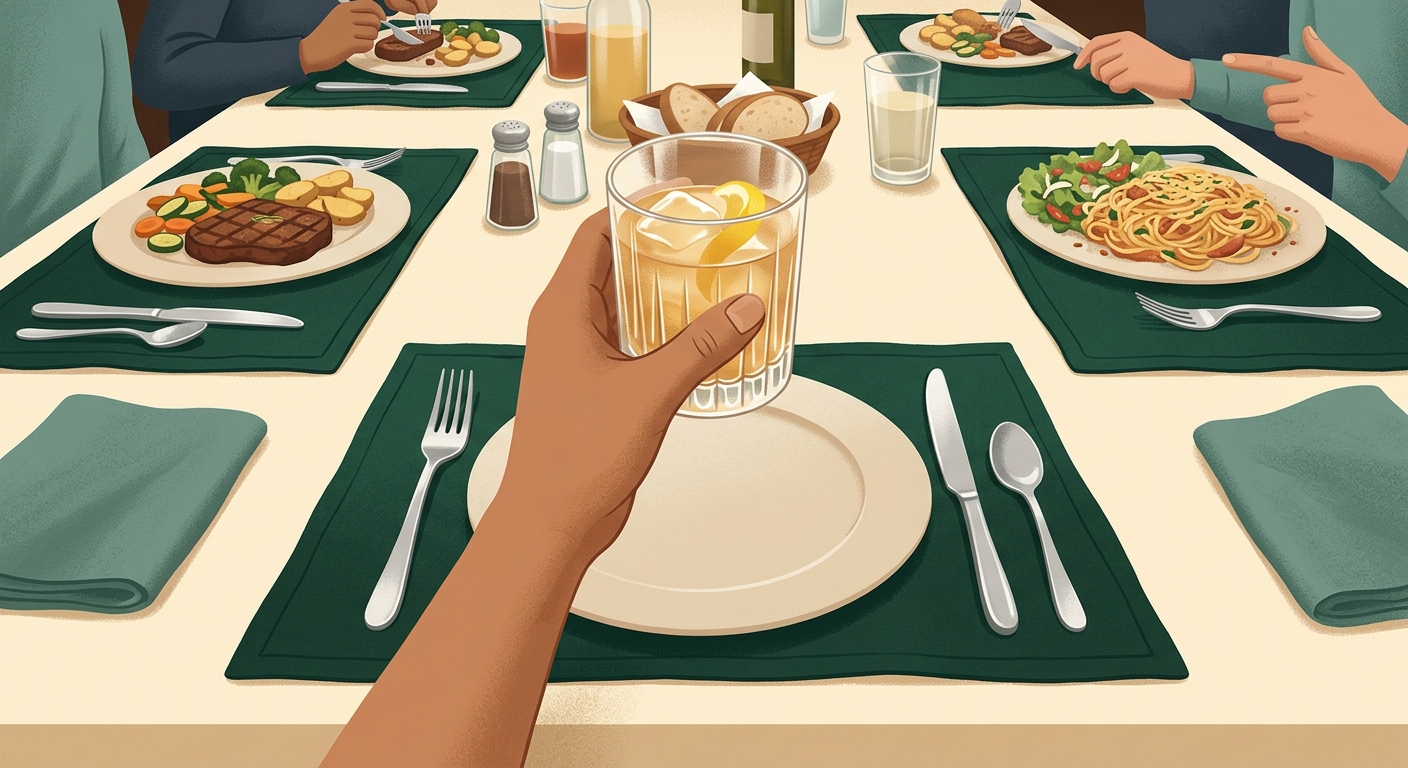
I was at an upscale restaurant for a family dinner — the kind of place where everyone at the table was ordering appetizers, entrées, and drinks without a second thought. My parents were covering the table, but that didn't change how I felt looking at the menu. Spending that much on a meal I didn't need felt wasteful to me, not because of whose money it technically was, but because it wasn't going toward anything I actually valued. So I ordered a drink, stayed for the conversation, and skipped ordering food. On the way home, I stopped at a McDonald's I'd noticed on the drive over and got dinner there instead.
Nobody made it a thing. Neither did I. That's really the whole habit — not a specific trick, and not a bigger paycheck. I've done fine with money so far mostly because I'm comfortable spending differently than the people around me, without treating it as either deprivation or a statement.
Why this feels harder than it sounds
Knowing you don't need to match everyone's spending is one thing; actually doing it in the moment is another. A few reasons it feels harder than it should:
- Silence reads as awkward, so people overcorrect by spending. Ordering nothing can feel like it needs an explanation, so it's easier to just order the appetizer nobody wanted.
- Groups default to splitting evenly. It's the path of least friction for a server and a table — right up until you ordered a $12 salad next to other people's $40 entrées and three rounds of drinks.
- Declining a plan can feel like declining the friendship. It isn't, but it can land that way if the "no" comes across as vague or last-minute instead of direct and early.
- Comparison is automatic, not a choice. Nobody decides to compare their spending to the table's — it just happens, and the discomfort of that comparison is what actually needs managing, not the menu.
Three scripts for spending less without making it weird
The version of this that actually works is decided in advance, not improvised while everyone's already looking at the check. Fill in your own details below — copy whichever one fits tonight.
What this isn't
This isn't about being cheap, and it isn't a judgment on anyone who does spend that way — some people genuinely value big group dinners and trips enough that the cost is worth it to them, and that's a legitimate choice too. The point isn't that spending less is morally better. It's that you don't need to match the table to belong at it, and treating your own number as normal — not a deprivation, not a statement — is what actually makes it sustainable to keep showing up.
Quick answers
Is it rude to not order food at a group dinner?
No, as long as it's handled matter-of-factly rather than announced as a statement about anyone else's spending. Ordering just a drink, saying you're not very hungry, or asking for a separate check before the table orders are all normal, low-friction ways to spend less without making it a conversation.
How do I say no to an expensive group trip without damaging the friendship?
Decline the specific plan, not the friendship — say it's not in your budget right now, thank them for the invite, and suggest a lower-cost way to spend time together instead. Most friction comes from going quiet or making an excuse that later falls apart, not from an honest, direct no.
What if everyone assumes the bill will be split evenly?
Ask before the table orders, not after the bill arrives — a quick "would you mind if we did separate checks?" is far easier for a server and the group to handle in the moment than renegotiating a bill that's already been split evenly.
This pairs with comparing yourself to others, not just spending
If the harder part for you is less about the bill and more about watching other people get ahead financially, see the real cost of a panic decision made while comparing myself to a colleague — a different side of the same comparison instinct.
None of this requires a specific income level to start — see our financial literacy basics hub for where to focus next, and why small financial wins deserve real celebration for why staying on your own budget, even quietly, is worth marking.



Fill in your details
The scripts below update as you type.
1. Skipping the menu without it being a thing
Said lightly, before anyone else orders — not as an announcement, just a normal answer to "what are you getting?"
2. Turning down a pricier group plan
Say it as soon as you know, not the week of — a late no reads as more of a letdown than an early, honest one.
3. Asking for separate checks before the bill comes
"Before we order — would you mind if we just did separate checks? Easier for me to keep track, and no math headache for anyone at the end."
Ask before the table orders, not after the bill lands — most servers will split checks without issue if asked up front.