 PocketProof
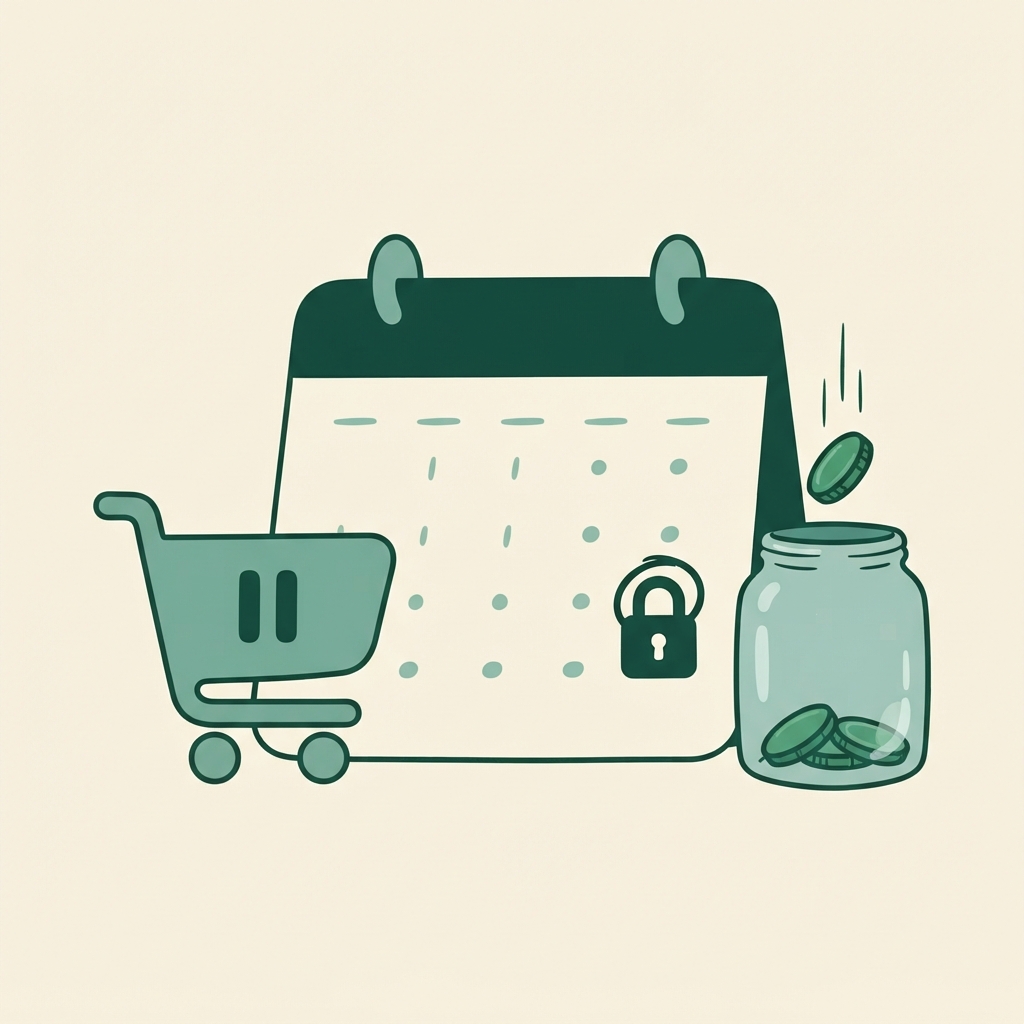
The 30-day rule is simple: when you want to buy something non-essential, write it down and wait 30 days before deciding. Most impulse purchases lose their pull within days, because the urgency came from the moment, not the item. Nothing is banned. You're just separating the want from the decision, so you make the call later instead of the moment making it for you.
Scale the delay to the price
A flat 30 days for everything is overkill for small stuff and not always necessary — a shorter, price-scaled delay still does the job for smaller purchases while reserving the full 30 days for anything that would actually matter to your budget:
| Purchase size | Suggested delay |
|---|---|
| Under $50 | 48 hours |
| $50–$200 | 1 week |
| $200–$1,000 | 30 days |
| $1,000+ | 30-90 days, and sleep on it more than once |
This is the offline, log-it-down companion to the psychology behind the rule — for the "why" it works and a calculator that computes a wait time from price and your own friction barriers, see our behavioral friction budgeting guide. This tool is the tracking half: log the item, see the exact date, and track what you actually did when that date arrived.
Your delay log
Log up to three pending purchases below to see the exact date each one unlocks, then come back and mark what you actually decided.
30-day delay log
Adjust the delay period if you're using a shorter window for a smaller purchase.
Your entries aren't saved anywhere — screenshot or print this once you've logged your items.
When the date arrives
- Check if you still want it — without looking at it again first. If you can't remember why you wanted it without a reminder, that's your answer.
- Check if the price changed. Sales and price drops are common enough that waiting sometimes pays for itself twice.
- If you skip it, move the money somewhere on purpose. A skipped purchase is exactly the kind of windfall that's easy to actually save — see our automation checklist for making that a habit instead of a one-off.
What quietly defeats the rule
- Checking the item every day "just to look." This keeps the want alive instead of letting it fade — log it and close the tab.
- Making an exception "just this once." One exception makes the next one easier to justify. If it's genuinely urgent, it's probably a need, not the kind of purchase this rule is for.
- Not writing it down at all. A mental note is easy to forget or rationalize away by tomorrow. A logged item with a real date is a commitment you made to yourself in a calmer moment.
If impulse spending is a recurring pattern rather than an occasional item, the delay rule works best alongside real structural friction — see our behavioral friction budgeting guide for adding barriers at the point of purchase itself, not just after the fact.