 PocketProof
I had about $5,000 invested. It wasn't a fortune, but it was the first real money I'd ever put into the market, and I was proud of it. Then I graduated, didn't have a job lined up yet, and watched my bank balance shrink every month with nothing coming in to replace it. One night I logged into the account, stared at the balance for a while, and sold everything. Not because I needed the cash that specific week. Because I couldn't stand watching a number I didn't control while everything else in my life felt out of control too.
It felt like relief for about a week. Then it just felt like a mistake I couldn't undo.
The actual, calculated cost
This isn't a vague "you should have held on" story — here's the real math on what that decision cost, assuming the market's long-run historical average return of roughly 7% a year.
| Years left invested | Value today | Gap vs. cashing out |
|---|---|---|
| 3 years | $6,125 | $1,125 |
| 5 years | $7,013 | $2,013 |
| 7 years | $8,029 | $3,029 |
| 10 years | $9,836 | $4,836 |
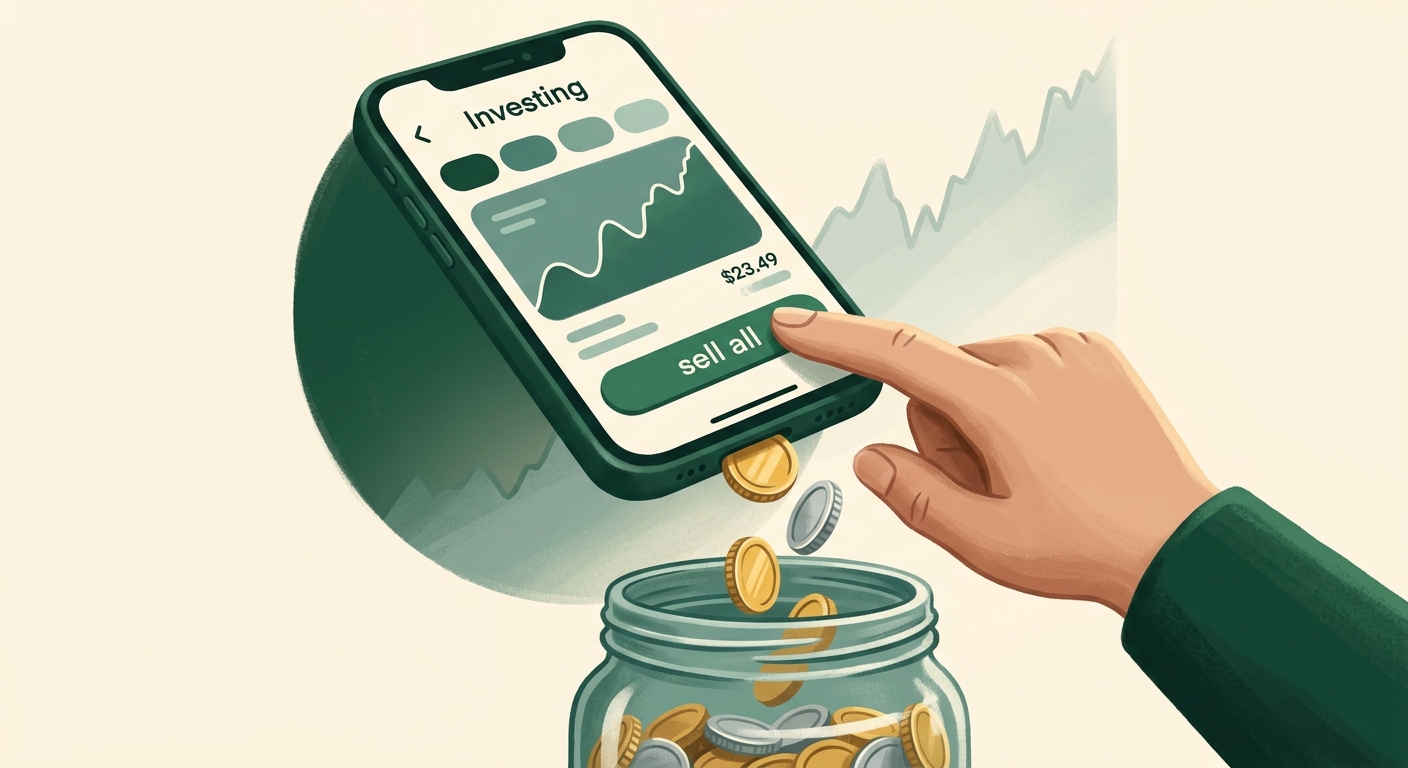
Five years out, that's a real, specific $2,013 I gave up — not because the investment failed, but because I made an emotional decision and then never put the money back in. That gap only grows the longer the money would have kept compounding. This is the actual, quantifiable price of panic-selling: not the money you lose in a downturn, it's the growth you permanently opt out of by cashing out and staying out.
What did your own cash-out actually cost?
If you've ever sold out of an investment during a rough stretch, plug in your own numbers to see what staying invested would have actually been worth.
Opportunity cost calculator
Defaults match the case study above.
A hypothetical based on average historical returns, not a guarantee — real markets don't move in a straight line, and the point isn't the exact number, it's the order of magnitude.
The trigger wasn't really about the money
Looking back, the decision wasn't purely about needing cash — I was also comparing my situation to a colleague who'd started investing years before me and was clearly further ahead. That comparison made an already stressful stretch feel like proof I was behind, and selling felt like taking back control. It wasn't control. It was panic wearing a rational-sounding excuse. If comparison to other people's progress is doing some of the driving in your own money decisions, our guide to celebrating your own financial milestones is the piece I wish I'd read first.
What actually would have prevented this
- A real emergency fund, sized for unemployment specifically. The problem was never that I'd invested — it's that I had no separate cushion for a job gap, so the investment account became the only lever I could pull.
- Deciding the rule before the emotional moment, not during it. "I won't touch this account unless it's a true emergency" is easy to agree with on a good day and nearly impossible to remember on a bad one, unless it's written down somewhere you'll actually see it.
- Recognizing that watching the balance is the actual trigger, not the market itself. Checking a volatile balance daily during an already-stressful stretch turns normal market noise into a constant, low-grade emergency signal it isn't.
- Automating the money out of easy reach in the first place. A harder-to-touch account doesn't stop a determined panic-sell, but it adds enough friction to survive an impulsive one.
I'm not writing this because I think panic-selling makes someone bad with money — it made complete emotional sense in the moment, which is exactly why it's worth planning around instead of just resolving to "not do that" next time. If you don't have a cushion built for exactly this kind of stretch yet, start with our starter emergency fund guide before you invest another dollar — and if you're getting started (or restarting) with investing itself, our beginner's guide covers the order to do it in so this doesn't happen to you the way it happened to me.