 PocketProof
Treat a medical bill as a starting offer. Before you pay it, put it on a card, or panic about it, there are three things almost every provider's billing office will do if you simply ask: send an itemized breakdown, check you for financial assistance, and set up a payment plan with no interest.
Why medical debt isn't like your other debt
Credit card debt is precise — the balance is the balance. Medical bills are different in three important ways:
- They're unusually prone to errors. Duplicate charges, incorrect procedure codes, and line items for services you never received show up often enough that requesting an itemized bill is worth doing every time, not just when something looks wrong.
- The sticker price often isn't the real price. The initial bill, especially for uninsured or out-of-network care, is frequently based on a provider's full list rate rather than the lower rate insurers actually negotiate — and billing offices will often apply a self-pay or prompt-pay discount if you ask directly.
- Credit reporting works differently. Under current major credit bureau policy, unpaid medical debt generally isn't reported until it's been unpaid for at least a year, and a medical collection account is typically removed from your report entirely once it's paid off — treatment credit card debt never gets. Policies like this can change, so confirm current rules if this is affecting a real decision.
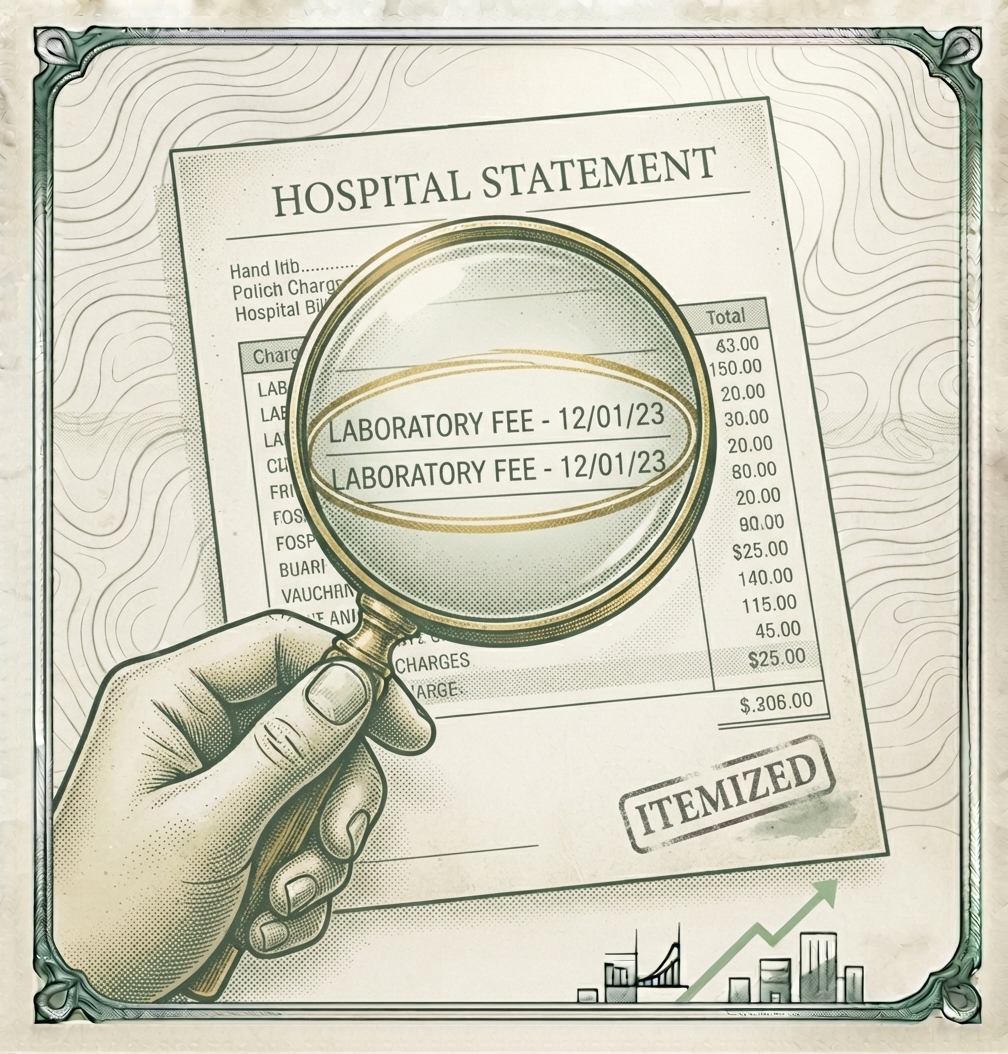
The three scripts to use, in order
Call the billing office number on the statement — not general patient services. Fill in your details once; the itemized bill request updates automatically.
Fill in your details
Used by the itemized bill request script below — the financial assistance and payment plan scripts don't need these specifics.
1. The itemized bill request script
Do this before paying anything, even a bill that looks correct — this is the step that catches errors.
2. The financial assistance script
"I'd like to ask about your financial assistance or charity care program for this bill. Can you send me the application, and let me know what income and documentation you need from me to be considered?"
Nonprofit hospitals are generally required to offer some form of this — it costs nothing to ask, whether or not you're insured.
3. The payment plan / prompt-pay script
"I'm not able to pay this balance in full right now. Do you offer a prompt-pay discount if I pay a portion today, or can we set up an interest-free payment plan directly through your billing office instead of sending this to collections?"
Ask this before a bill goes to collections, not after — billing offices have far more flexibility on their own accounts.
Medical bill action checklist
Work through these in order. Check them off as you go — your progress isn't saved anywhere, so screenshot it if you want a record.
Before you pay a medical bill
A typical outcome
Devon gets a surprise ER bill for $4,200. Requesting the itemized bill turns up a duplicate charge and a line item for a test that was ordered but never actually performed — the provider corrects both without argument once flagged, since these are genuine billing errors, not negotiated discounts. Devon then asks about financial assistance and qualifies for a partial reduction based on income, and sets up a 12-month, 0%-interest payment plan directly with the hospital's billing office for what's left. No collections call, no credit card, no interest — just three phone calls, in order.
This is a realistic, commonly reported pattern — not a guaranteed outcome. Every provider and situation is different; the scripts above are the starting point, not a promise of a specific result.
If a medical bill did end up on a credit card before you saw this, treat it like any other high-interest balance — see the true cost of minimum payments and our debt snowball vs. avalanche comparison for how to get it paid off. And this is exactly the kind of expense a starter emergency fund exists to absorb before it becomes debt at all.