 PocketProof
If you're living paycheck to paycheck, "save three to six months of expenses" is correct advice you can't use yet. Six months of expenses can feel like a mountain so tall it's not even worth starting. So start smaller, and start now.
Forget six months. Start with a $500 starter fund
Before anything else, aim for a small buffer — $500 to $1,000 — set aside specifically for the unglamorous emergencies that actually derail budgets: a car repair, a broken appliance, an unexpected medical copay. This alone prevents most of the "emergency" credit card debt that keeps people stuck. See our guide to saving your first $1,000 quickly for the fastest tactics, not just the target.
Then build toward the full fund in stages
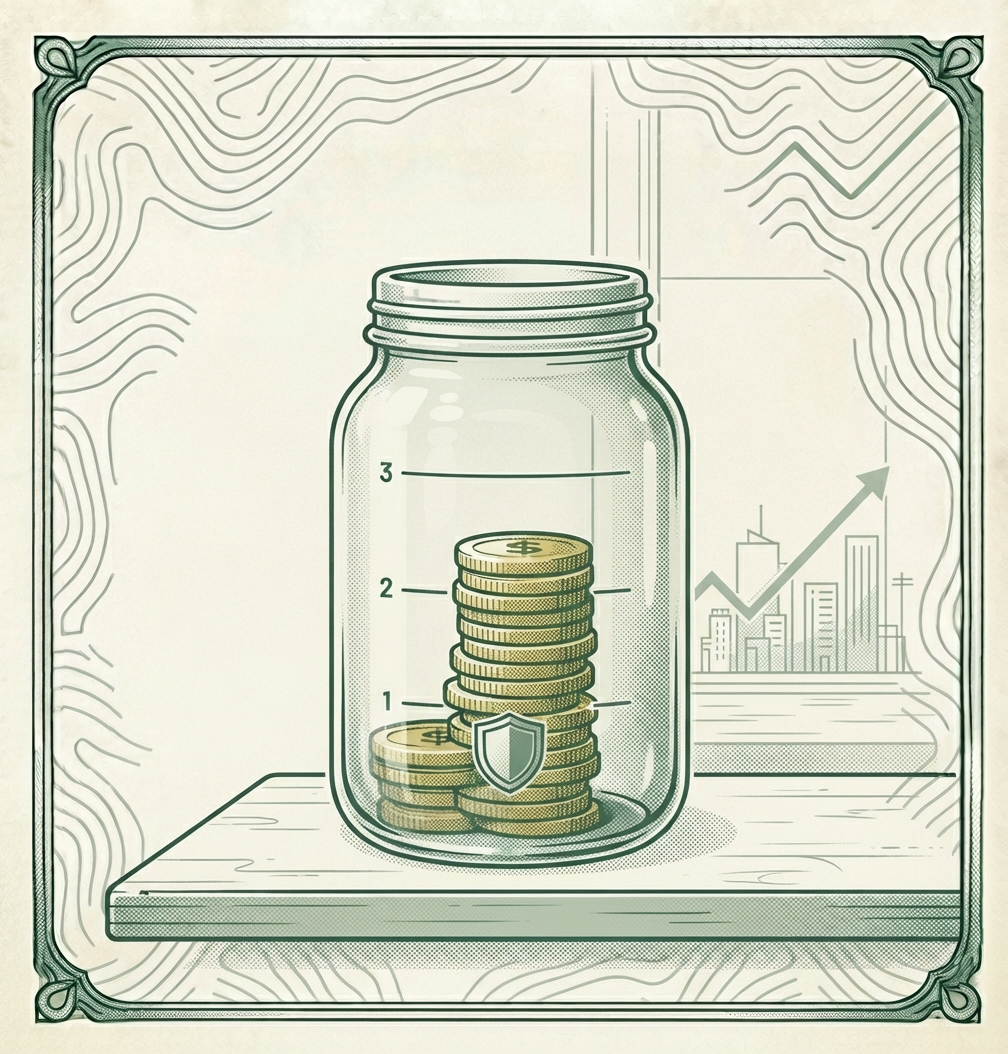
- Stage 1: $500–$1,000 starter fund. Covers the small, common emergencies.
- Stage 2: One month of essential expenses. Rent, utilities, groceries, minimum debt payments, insurance — just the essentials, not your full lifestyle.
- Stage 3: 3–6 months of essential expenses. The traditional full emergency fund, sized to your job stability and household situation (one income vs. two, freelance vs. salaried) — see our personalized target calculator for your actual number instead of guessing where in that range you land.
Moving through these stages over a year or two is completely normal. The starter fund is what actually changes your day-to-day financial stress; the rest builds resilience over time.
Where to actually keep it
A high-yield savings account, separate from your everyday checking account. It should be reachable within a day or two, but not sitting right next to your debit card where it's one tap away from becoming a shopping fund. Keeping it at a different bank than your checking account adds just enough friction to prevent casual dipping, while still being accessible in a real emergency. This is the "under 3 months" bucket in our full savings timeline decision tree, if you're sorting out where other goals belong too.
What counts as a real emergency
- Job loss or a significant drop in income — see our job loss runway calculator and priority action guide if this happens
- Essential car or home repair
- Unexpected medical or dental costs — and if a bill does show up, see our medical debt realities guide before you just pay whatever the statement says
- Emergency travel (a family crisis, for example)
A sale ending soon is not an emergency, no matter how good the deal is. Neither is a bill you actually knew was coming — car registration, an annual insurance premium, holiday gifts. Those belong in a sinking fund, not this one; using the emergency fund for a predictable expense just means it's not ready when a real emergency shows up. Keeping each goal in its own savings bucket makes that line much easier to hold.
How to fund it when there's nothing "extra"
If your budget genuinely has zero slack, the fund still starts — just slower and from different sources than your regular paycheck:
- Automate a small, boring amount. Even $10–$25/week adds up faster than it feels: at $20/week with a 4% APY savings account, you'd clear the $1,000 starter fund in about a year and a one-month essential-expenses cushion a little over two years in — see the table and calculator below for other amounts. Automating it removes the decision entirely — see our automation setup checklist for exactly how to set that up.
- Redirect windfalls before you feel them. Tax refunds, rebates, cash gifts, and reimbursements are easy to save because you never budgeted around having them.
- Apply savings from cuts directly. If you trim a subscription or renegotiate a bill (see our guide on cutting monthly expenses), send that exact amount to the fund the same day, automatically if your bank allows it.
- Sell what you're not using. A one-time push — old electronics, unused furniture, clothes — can jumpstart a starter fund fast, especially useful for reaching that first $500.
| Weekly | Monthly | Stage 1 ($1,000) | Stage 2 ($2,200) | Stage 3 ($8,800) |
|---|---|---|---|---|
| $10/wk | $43/mo | 23 mo | 47 mo | 156 mo |
| $15/wk | $65/mo | 16 mo | 33 mo | 112 mo |
| $20/wk | $87/mo | 12 mo | 25 mo | 88 mo |
| $25/wk | $108/mo | 10 mo | 20 mo | 73 mo |
| $40/wk | $173/mo | 6 mo | 13 mo | 47 mo |
The account you pick matters more than it seems. Interest compounds on whatever's already sitting there, so a 4%-APY high-yield account versus a near-zero checking account isn't a rounding error over a multi-year timeline — on a $20/week contribution toward a full fund, it's the difference between reaching it in 88 months instead of 102. That's over a year of "unprotected" time the account choice alone buys back, before you've changed a single dollar of your contribution.
Your emergency fund timeline
Plug in your own expenses, contribution, and account rate to see exactly when you'll hit each stage.
Emergency fund timeline calculator
See exactly when you'll hit each stage, based on what you can actually contribute.
Assumes your weekly contribution and APY stay constant. A raise, a slower month, or a rate change will move these dates.
What if you have high-interest debt at the same time?
Build the small starter fund first (most experts suggest $500–$1,000), then split focus between extra debt payments and continuing to grow the fund. Having zero cushion means every emergency becomes new credit card debt — which defeats the purpose of paying down debt in the first place. A small fund protects your debt payoff plan from getting derailed. Put both as real line items in your zero-based budget — a fund contribution that only happens with "leftover" money is the same failure mode the budgeting method itself is built to fix.
$500–$1,000
Starter fund for small emergencies
1 month
Of essential expenses only
3–6 months
Full fund, sized to your job stability
Once the starter fund is done, exactly how to split what's left between the fund and debt depends on your interest rate — see our emergency fund vs. debt payoff calculator for the actual split, not just a rule of thumb.
If you're deciding how to prioritize which debts to attack once your starter fund is in place, see our comparison of the debt snowball and debt avalanche methods.
Once your fund is fully built and any high-interest debt is handled, the next question is usually what to do with money you won't need for years — see our guide on how to start investing when you know nothing about it.
An emergency fund is only one goal on a longer list — see our guide on sorting every financial goal into needs, wants, and somedays for where this fund fits alongside everything else you're saving toward.