 PocketProof
"Renting is throwing money away" was true-ish advice for a specific set of conditions: mortgage rates around 4%, home prices that hadn't detached from local incomes, and rent that climbed close to what a mortgage payment would cost anyway. A lot of that has changed. Mortgage rates roughly doubled from their 2020-2021 lows, home prices kept climbing, and in plenty of markets rent is meaningfully cheaper than what buying the same place would actually cost per month. The advice didn't change. The math underneath it did.
The comparison most calculators get wrong
Most "rent vs. buy" tools compare your monthly rent to your monthly mortgage payment and call it a day. That's the wrong comparison. A mortgage payment isn't pure cost — part of it (principal) is money going into an asset you own. And a down payment isn't free to put down — it's money that could have been invested instead, and buying means giving up whatever that money would have earned elsewhere. The fair comparison is net worth after a set number of years: what you'd walk away with if you sold the home (value minus remaining loan minus selling costs) versus what a renter would have if they invested the down payment and any monthly savings from renting instead of buying.
A verified example, at today's rates
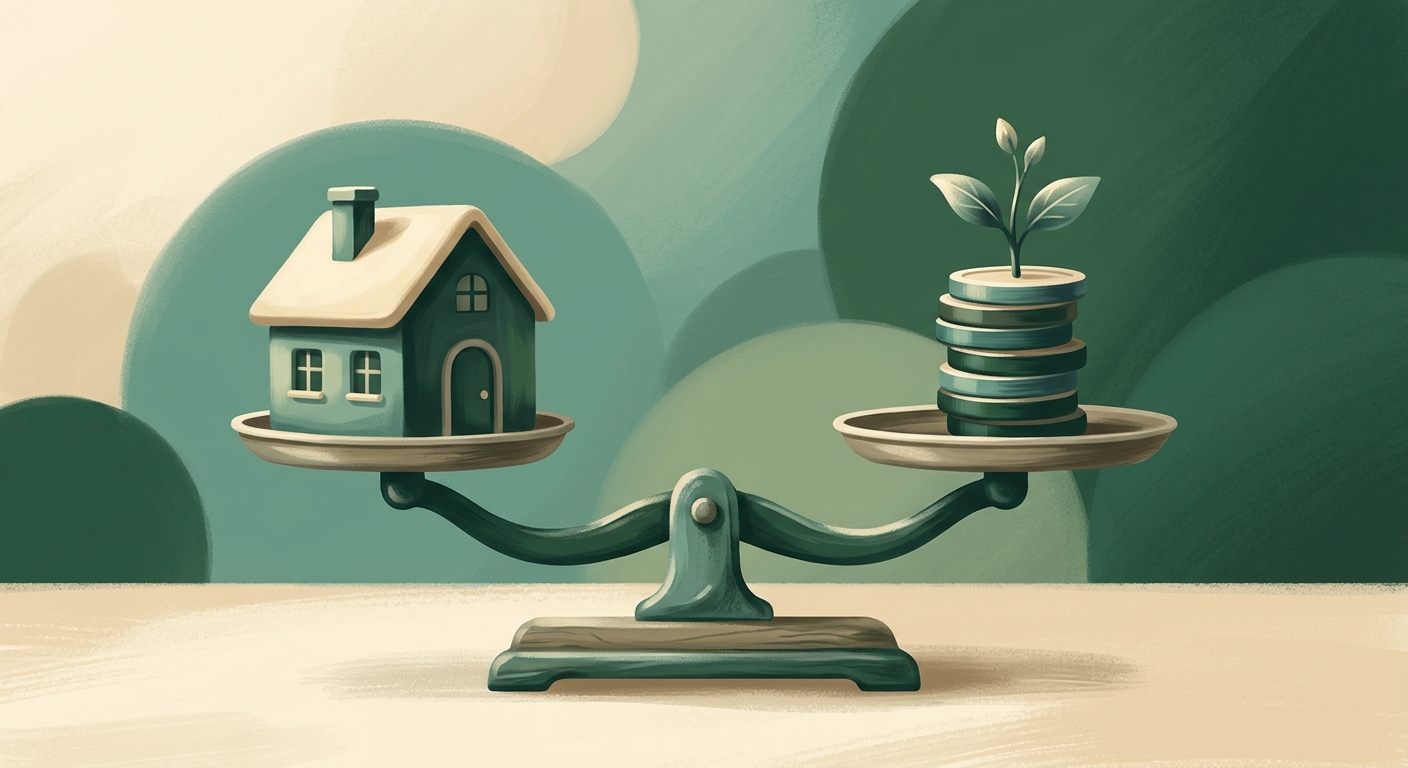
A $350,000 home, 10% down, a 6.75% 30-year mortgage, 1.1% property tax, 1.5% combined insurance and maintenance, and 3.5% annual home appreciation — against a comparable $1,800/month rent growing 3% a year, with the difference invested at a 7% average return. Here's the net worth each path actually produces:
| Years | Buying (home equity, net of selling costs) | Renting + investing the difference |
|---|---|---|
| 5 years | $95,040 | $140,127 |
| 7 years | $132,599 | $194,777 |
| 10 years | $195,389 | $303,855 |
| 15 years | $320,309 | $597,774 |
At every horizon tested, renting and actually investing the difference comes out ahead — by about $45,000 at year 5, growing to nearly $278,000 by year 15. That's not because buying is a bad idea in general. It's because a 6.75% mortgage rate makes borrowing expensive, a relatively low price-to-rent ratio makes renting cheap by comparison, and a 7% market return compounds faster over 15 years than 3.5% home appreciation does. Change any one of those assumptions — a lower rate, a higher rent, a hotter local housing market — and the answer can flip entirely, which is exactly why the calculator below matters more than this one example.
Run your own numbers
Plug in your actual local rent, home price, and mortgage rate — the answer depends entirely on your specific market, not a national average.
Rent vs. buy net worth calculator
Defaults match the case study above. Selling costs are assumed at 6% of home value.
A hypothetical based on your assumptions, not a guarantee — home appreciation, rent growth, and market returns all vary in reality, and this doesn't include moving costs, renovations, or tax deductions.
Why the gap grows the longer you wait to sell
Early on, the two paths look closer than they end up being — but compounding is not linear. The renter's invested down payment and yearly savings keep earning returns on returns, while the buyer's gains are capped by whatever the home itself appreciates. A market return that's a few points higher than home appreciation doesn't just win — the gap between the two widens every single year you hold, which is why the difference at 15 years is more than six times the difference at 5 years in the example above.
What the math can't fully capture
- Renting only wins if you actually invest the difference. The entire renting scenario depends on genuinely putting the savings into an account that earns something — if it just sits in a checking account or gets spent, buying wins by default in most comparisons like this one.
- A home forces savings discipline; investing usually doesn't. A mortgage payment happens automatically every month whether you feel like it or not. An investing habit requires you to actually do it consistently, which is a real behavioral gap this calculator can't account for — see how to automate savings so you don't have to rely on willpower.
- Stability and control have real value that isn't in this spreadsheet. Not being subject to a landlord raising rent or selling the building out from under you is worth something, even when the pure math favors renting.
- Buying reduces flexibility in a way that matters for careers in their 20s. Selling costs (assumed at 6% here) make buying expensive if you need to move again within a few years for a job — the shorter your expected timeline in one place, the more that tips toward renting regardless of the rate environment.
None of this means "never buy a home" — it means the blanket "always buy" advice from a lower-rate era doesn't automatically transfer to today's numbers, and it's worth actually running your own before assuming either answer. If renting-and-investing comes out ahead for you, our investing for complete beginners guide covers exactly how to actually do the "invest the difference" part of this math for real. And since this decision is ultimately about affording a major purchase responsibly either way, our car affordability guide uses the same "know your real numbers before committing" approach for the other big purchase most people make around the same time in life.