 PocketProof
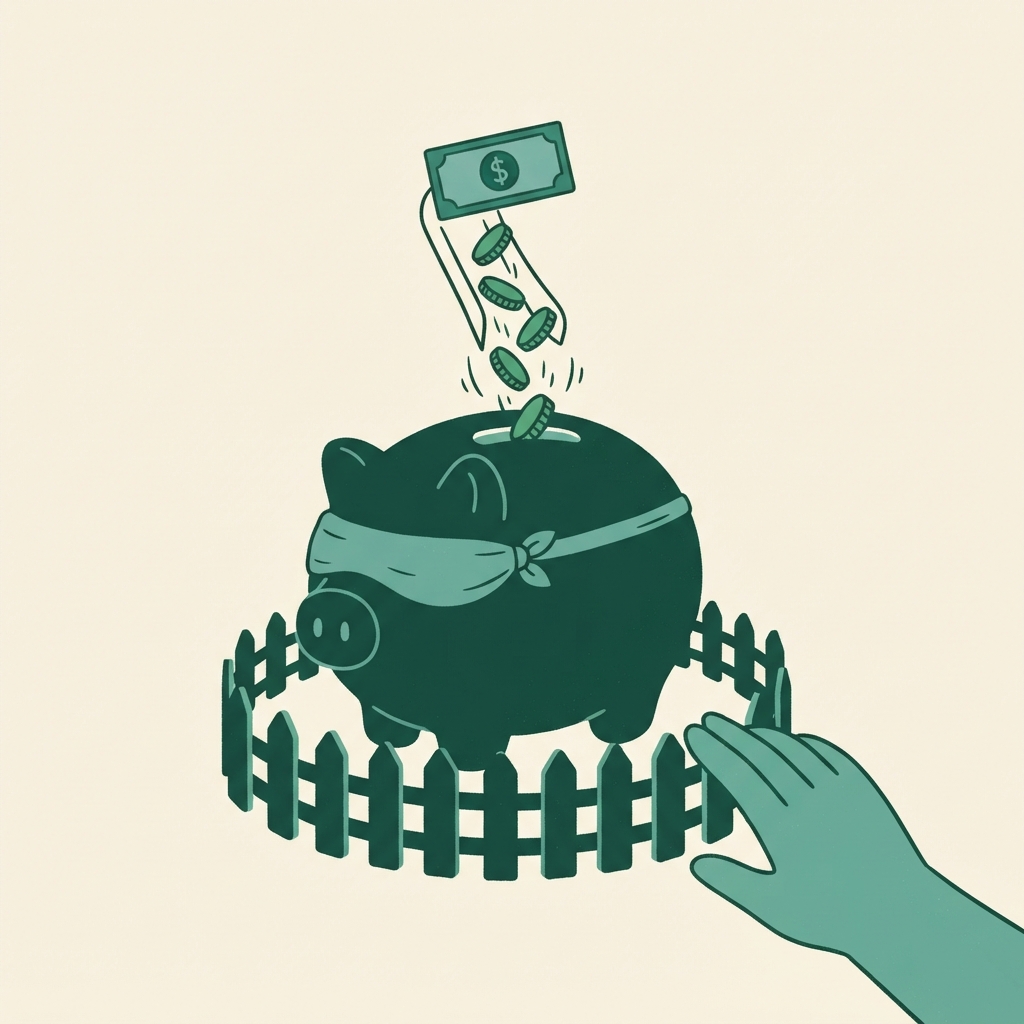
The most reliable way to save consistently is a setup where you only make the decision to save once. Every system on this list works by the same principle: move the money before you can decide not to, and make it just annoying enough to get back out that you don't do it on a whim.
Why removing the decision beats willpower
A manual transfer asks you to make the same choice every single payday, forever, and every one of those moments is a chance to skip it "just this once." Automation collapses that into a single decision, made once, that then repeats itself without needing your attention or motivation again. It's the same principle behind our behavioral friction budgeting guide — adding friction against spending works the same way as removing friction from saving: both take the decision out of the moment.
The automation setup checklist
Work through these roughly in order — each phase builds on the last. Check them off as you go.
Your savings autopilot checklist
Phase 1: The basic setup
Phase 2: Automate the money itself
Phase 3: Make it grow and stick
Why each of these actually works
- A different bank adds real friction. Money at the same bank as checking is one transfer away from being spent. A separate login and a day or two of transfer delay is enough friction to stop most casual dipping without making the money inaccessible for a genuine emergency.
- Payroll splitting beats a manual transfer. A transfer you set up yourself still requires the money to land in checking first, which means it's visible and spendable before it moves. Splitting at the payroll level means it never shows up as available in the first place.
- Naming the account changes how you see it. An account called "Home Down Payment" or "Car Repair Fund" reads as already spoken for. An account called "Savings" reads as a number you could always dip into "just this once." Our guide to savings buckets shows how to give every goal its own named account.
- Automating the increase matters as much as automating the start. Lifestyle creep quietly absorbs raises before you notice — bumping the automated percentage the same week a raise lands keeps the increase from ever becoming spendable income you get used to.
Automating the deposit only solves half the problem if the money you're setting aside doesn't have a clear destination yet. If you're building your first cushion, our guide to saving your first $1,000 quickly covers the fastest path there; once that's done, our personalized emergency fund target calculator tells you where automation should actually stop.
One thing automation doesn't fix
If your checking account regularly runs dry before the automated transfer date, the plan doesn't match your real cash flow. Adjust the amount or the date, and keep the automation. Build savings as a real line item in your zero-based budget first, sized to what's actually left after fixed costs, then automate that number instead of an aspirational one.
None of this requires a system smarter than you — it requires a system that doesn't need you to remember, decide, or feel motivated on any given day. Set it up once, and let it run.