 PocketProof
Most budgets fail for the same reason diets fail: they're built around restriction instead of a plan. You track spending for a week, feel bad about the takeout total, and quietly stop opening the app. Zero-based budgeting works differently. Instead of watching money disappear and reacting to it, you decide where every dollar goes before you spend a cent of it.
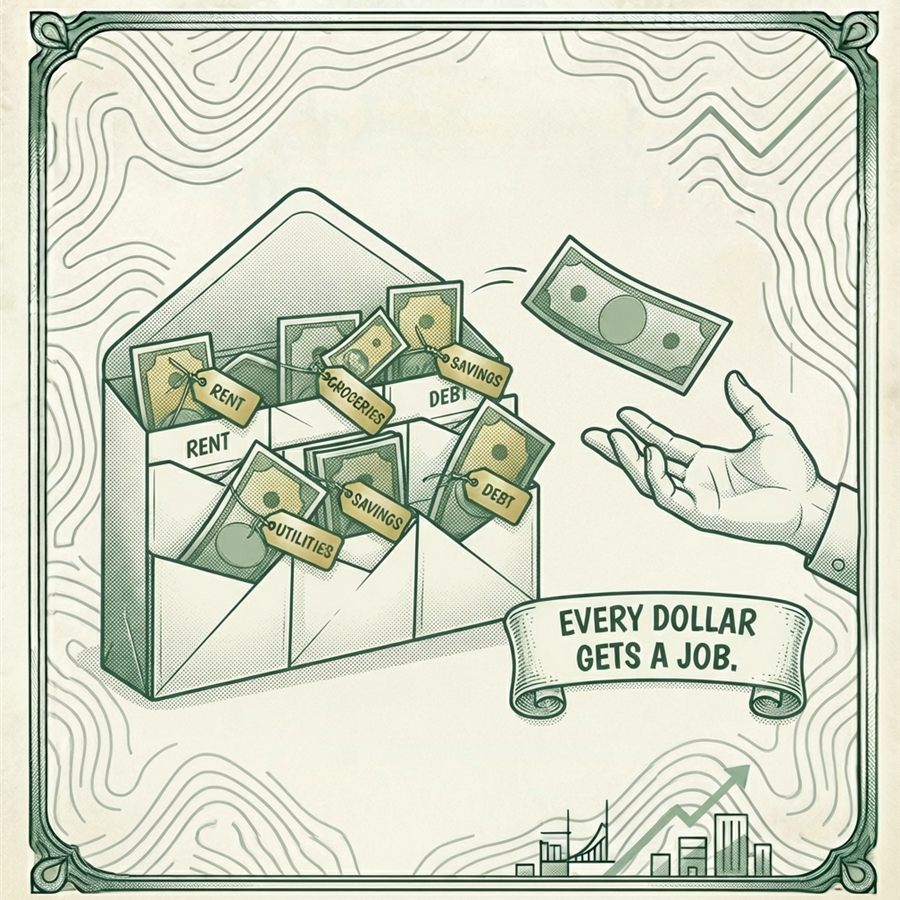
It's called "zero-based" because at the end of the exercise, your income minus your planned spending and saving equals zero. Not because you spend everything — because every dollar has an assignment, including the dollars going into savings.
Why this method works better than "just tracking spending"
Tracking spending tells you what already happened. Zero-based budgeting tells you what's allowed to happen. That shift — from review to plan — is the entire reason this method has stuck around for decades while dozens of budgeting apps have come and gone. You're not grading yourself after the fact; you're making the decision once, at the start of the month, when you're calm and not standing in a checkout line.
Before you start, gather three things
- Your take-home pay for the month (after taxes, after any automatic deductions)
- A list of your fixed bills (rent, insurance, loan payments, subscriptions)
- A rough sense of what you spent last month on food, gas, and "everything else" — bank and card statements work fine for this
1Add up your real monthly income
Use your take-home pay, not your salary. If your income varies a lot — hourly work, freelancing, tips, commission — averaging is riskier than it sounds; see our dedicated guide on budgeting on an irregular income for a framework built specifically for that case. Budgeting against optimistic income is the single most common reason zero-based budgets fall apart in month two.
2List every expense, starting with fixed costs
Write down everything that has to be paid no matter what: rent or mortgage, utilities, minimum debt payments, insurance, phone bill, subscriptions you're keeping. These numbers rarely change month to month, so this part goes quickly — that predictability is exactly why fixed costs are rarely where a budget actually leaks; see our fixed vs. variable expense guide for where to look instead.
3Assign the flexible categories
This is where zero-based budgeting earns its keep. Break your remaining spending into categories that reflect how you actually live — groceries, gas, dining out, personal spending, kids' activities, whatever applies. Use last month's real numbers as your starting point, then adjust deliberately. If groceries ran $520 last month and that felt fine, budget $520 again rather than an aspirational $350 you won't hit. Don't forget the bills that aren't monthly — car registration, annual premiums, holiday gifts — see our guide on sinking funds for turning those into a small predictable line item instead of letting them blow up a random month's budget.
Add up income
Take-home pay, not salary
List fixed costs
Rent, bills, insurance, minimums
Assign flexible spending
Groceries, gas, dining, personal
Pay yourself first
Savings & extra debt, as a line item
Balance to zero
Income minus every category = $0
4Pay yourself first — literally, as a line item
Savings and debt payoff beyond the minimum get their own category, just like rent. Decide the amount before you plan discretionary spending, not after. Even $25 counts as a line item if that's genuinely what fits right now; the habit matters more than the amount at the start. If you're carrying balances beyond the minimums, see our debt snowball vs. avalanche comparison to decide which debt this line item should target first.
5Do the math — and adjust until it hits zero
Income minus every category should equal zero. If you're short, don't panic — this is normal on the first try. Cut a flexible category, not a fixed one, and recheck. If there's money left over, assign it somewhere on purpose (extra debt payment, savings, a category you underfunded) rather than letting it float as "whatever's left," which is exactly the pattern this method is designed to fix.
A simple example
Take-home pay: $3,400/month. One flag before the breakdown: this example puts rent at 38% of take-home — above the 25–30% range most budgeting guidelines use for housing. It still zeroes out, which is the mechanical goal of this method, but "balances to zero" and "sustainable" aren't the same claim. If your own rent runs above 30%, the math below still works — you'll just have less room in the flexible categories, and that's worth noticing rather than budgeting around silently.
Zero left unassigned — every dollar has a job, including the $85 going toward extra debt payoff (highlighted above, along with regular savings).
Try it with your own numbers
The example above is one household's budget, not yours. Use the calculator below to run your actual take-home pay and see whether your budget hits zero — and whether your own rent share clears the same flag.
Zero-dollar budget builder
Defaults are pre-filled with the example above.
This tool only totals the numbers you enter — it doesn't know your real bills. Use it to check your budget hits zero, not as financial advice.
Keeping it going after month one
Your first month's budget will be wrong in small ways, and that's fine — it's a plan, not a prophecy. Revisit it at the end of each month: which categories ran over, which had room to spare? Move the numbers to match reality rather than forcing reality to match last month's guess. After two or three months, most people find their budget stabilizes and takes only ten minutes to update.
If the same category — usually dining out or personal spending — keeps running over no matter how you adjust the number, the problem often isn't the estimate. It's how easy your accounts make it to spend without thinking. See our guide on behavioral friction budgeting for specific barriers that fix that directly.
If you're not sure how to divide flexible spending into categories, the 50/30/20 rule is a good simpler starting framework you can layer underneath a zero-based approach. Still not sure which one fits you? See our head-to-head comparison of the two methods, or take our budget style quiz if the real question is which system you'll actually stick with past the first two weeks. Want to see this whole method applied to a specific real income instead of the example above? See our full worked budget on a $50,000 salary.
Want this on paper?
The Printable Monthly Budget Planner in the PocketProof Etsy shop ($7) turns this system into a print-at-home workbook — monthly overview, weekly expense tracker, debt payoff log, and savings goal tracker in one PDF.